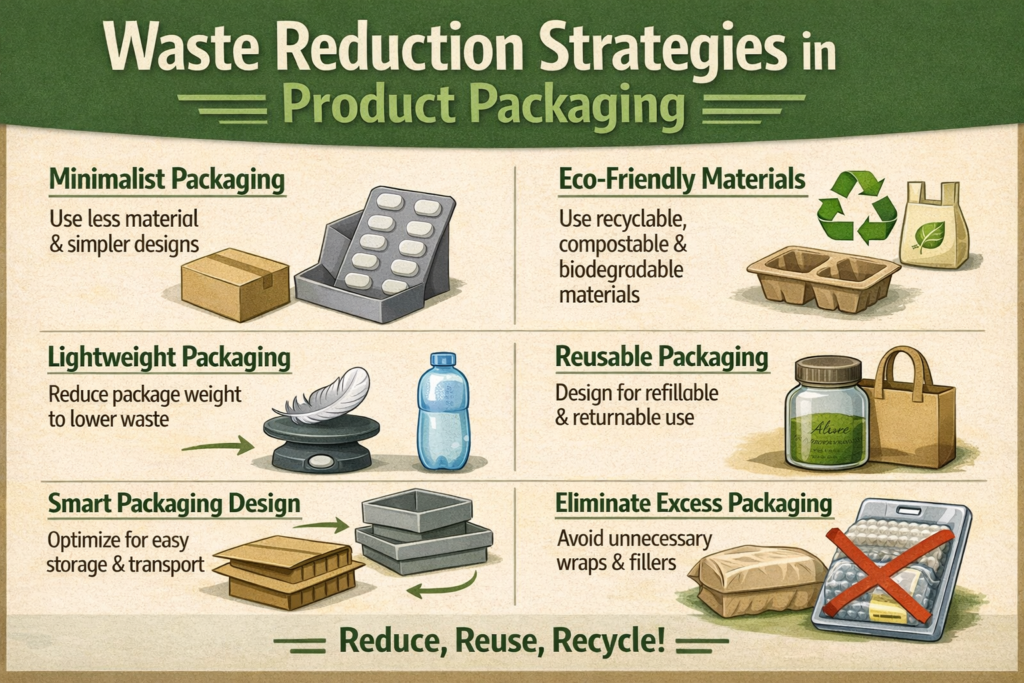
The purpose of packaging is to safeguard products while simultaneously functioning as a means to showcase brand value. Consumers these days base their buying choices on how products are visually presented to them.
The excessive plastic usage, together with oversized packaging and unnecessary extra components, creates waste problems that need to be solved. The combination of these elements results in waste problems.
Waste materials create environmental damage while also decreasing the financial success of businesses. Responsible companies today make it their mission to decrease the waste produced by their packaging materials.
The objective is simple. The system requires users to execute three actions, which include using less, doing better, and thinking better. This blog presents techniques that help businesses decrease their packaging waste while maintaining their product safety standards and quality requirements.
The Importance of Reducing Packaging Waste
The world is facing a problem because packaging waste keeps increasing. Landfills are expanding. The environment suffers from plastic pollution. Meanwhile, consumers are becoming more aware of sustainability. Businesses experience various advantages when they reduce waste from packaging.
- Cost advantages come from decreased material needs and lower shipping costs.
- The company’s reputation improves through enhanced brand recognition.
- The company achieves compliance with environmental regulations.
- The company attracts environmentally conscious customers who prefer sustainable products.
Right-Size Your Packaging
The most common problem that companies face when packaging their products exists because they use boxes that are bigger than necessary. The need for additional packing materials arises whenever a box exceeds its ideal dimensions. This process results in greater packaging waste and increased shipping weight.
Right-sized packaging solves this problem. The system keeps the box dimensions tightly matching the product dimensions. The product needs less bubble wrap, foam, and paper fillers because it has less open space.
Smaller packages also reduce transportation emissions. Trucks can carry more units in one shipment. That means lower fuel use and lower carbon footprint.
Make Sustainable Choices for Packaging Materials
Any waste management plan needs material choice as its essential component. The decomposition process for conventional plastic packaging materials requires multiple decades to complete. The materials end up in both landfills and oceans as their primary disposal method.
Sustainable packaging materials create major environmental advantages which benefit the Earth. The materials recycled cardboard, kraft paper, biodegradable shipping bags, and compostable packaging products create sustainable alternatives. The materials create an environmentally friendly system which enables waste materials to be recycled through circular economy practices.
Recycled packaging materials demonstrate to customers that your brand is a supporter of environmental protection.
Remove All Single-Use Plastic Products
The planet has a serious problem with environmental waste due to plastic packaging materials, which are used only once. Companies are now opting for plastic-free packaging solutions instead of using plastic.
Companies can use paper padding and corrugated inserts instead of plastic bubble wrap. Molded pulp trays are used as an eco-friendly packaging solution for the distribution of products. The use of paper tape instead of plastic tape has a huge environmental effect.
Simplify Packaging Design
Complex packaging designs often require multiple materials and extra layers. This increases both cost and waste. A minimal packaging design focuses only on what is necessary. It removes decorative elements that do not add value. It reduces coatings and heavy finishes that make recycling difficult.
Simple design improves recyclability. It also creates a clean and modern appearance. Many customers prefer packaging that feels honest and practical rather than excessive.
Improve Supply Chain and Handling
Waste does not only happen during manufacturing. It also happens during storage and transportation. Poor handling results in product damage which leads to repackaging and creation of waste materials.
The use of stronger and lighter packaging materials results in reduced damage. The implementation of better warehouse organization and superior stacking systems leads to reduced product breakage.
This way, the process of waste reduction becomes easier through the implementation of better logistics systems.
Encourage Recycling
Recycling programs require people to understand the recycling procedures through easy-to-understand instructions. Customers are often interested in recycling packaging but are not sure how to dispose of it. The absence of clear instructions results in recyclable items being discarded with regular trash.
The solution to this issue needs clear instructions for resolution. The use of basic recycling symbols and disposal instructions will guide customers. People will follow the provided instructions when they understand their required tasks. Recycling rates can improve in this manner.
Use Sustainable Printing Methods
Printing methods can also impact packaging sustainability. Conventional inks may contain harmful chemicals that are detrimental to the environment. Thick coatings and laminations make recycling more difficult.
Water-based or soy-based inks are safer alternatives. Limiting printing to essential information reduces ink usage. Digital printing for smaller batches prevents excess production and material waste.
These small adjustments support overall sustainable packaging goals.
Regular Packaging Reviews
Waste reduction is an ongoing process. Businesses must review their packaging processes on a regular basis. A packaging review can assist in determining areas where material waste can be minimized.
It may point out unnecessary layers, oversized packaging, or alternative materials. Regular improvements will keep packaging on track with sustainability goals. Small changes make a big difference.
The Business Value of Waste Reduction
Waste reduction in packaging has benefits beyond the environment. It directly affects the bottom line and customer loyalty. Less material means lower costs. Lighter packaging means lower shipping costs. Sustainable packaging also appeals to consumers who value responsible businesses.
The modern market values honesty and a commitment to the environment. Businesses that implement waste reduction techniques in product packaging are poised for future success.
Final Thoughts
Waste reduction in product packaging involves making informed decisions throughout the process. From using eco-friendly materials to streamlining packaging design and optimizing logistics, every decision counts.
The key is always balance. Protect the product. Eliminate waste. Promote sustainability. When businesses make informed decisions about better packaging solutions, they achieve reduced waste, reduced costs, and increased customer trust.







 Company
 Top products
 Help
Help
 Payment Method