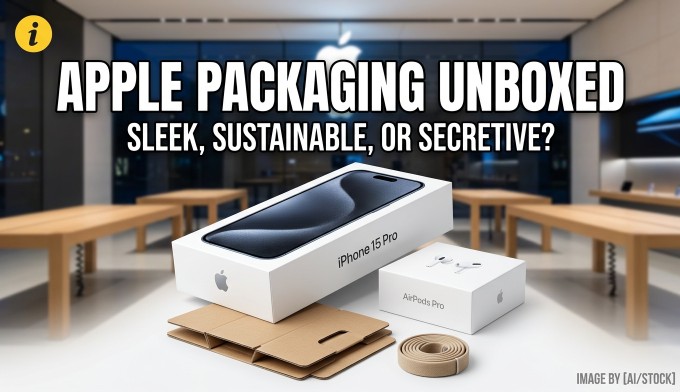
Apple products are known for their technology, but the packaging has become part of the brand experience too. The moment a customer picks up an iPhone, MacBook, iPad, or Apple Watch box, the packaging communicates something about the product before the box is even opened.
Its clean appearance, precise construction, minimal graphics, and carefully positioned components are all intentional. At the same time, Apple has been changing the materials inside its packaging to reduce plastic and move toward more recyclable alternatives.
So, what kind of packaging does Apple use? Today, Apple primarily uses fiber-based packaging made from materials such as paperboard and molded fiber. The company’s latest environmental updates show that Apple has reached an important packaging milestone: every package manufactured today uses 100% fiber-based materials, with limited exceptions related to existing inventory.
Let’s take a closer look at what makes Apple’s packaging distinctive and what brands can learn from it.
What Type of Packaging Does Apple Use?
Apple primarily uses paper-based and fiber-based packaging for its products. Depending on the product, the package may include paperboard structures, molded fiber trays, paper wraps, protective inserts, labels, and other fiber components.
The exact construction varies according to the product. A compact accessory does not require the same structural solution as a MacBook or iPhone. Instead of using one standard box design, Apple develops packaging around the dimensions, weight, fragility, and components of each product.
This product-specific approach helps Apple achieve two things at once: protect the product and avoid unnecessary packaging material.
Apple has also significantly reduced its reliance on plastic packaging. According to its latest environmental information, every package manufactured today is made with 100% fiber-based materials. Apple defines this packaging goal around the fiber-based material used in its packaging and excludes inks, coatings, and adhesives from the calculation.
Existing inventory containing plastic represented less than 0.4% of Apple’s total packaging footprint in fiscal year 2025, showing how close the company has come to completing its transition.
Apple’s Packaging in Numbers
Apple’s packaging strategy becomes more interesting when you look at the figures behind its material changes.
Here are several notable facts:
- 100% fiber-based: Apple says every package manufactured today uses fiber-based materials.
- Less than 0.4%: Plastic-containing existing packaging inventory represented less than 0.4% of Apple’s total packaging footprint in fiscal year 2025.
- More than 99% fiber-based: Packaging for the iPhone 15 lineup was already more than 99% fiber-based.
- 1,100+ metric tons of plastic avoided: Apple’s packaging innovations helped the company avoid more than 1,100 metric tons of plastic.
- 2,400+ metric tons of CO₂ avoided: Those packaging changes also helped avoid more than 2,400 metric tons of carbon dioxide.
- 100% fiber-based packaging goal achieved: Apple’s latest update confirms that newly manufactured packaging has reached this milestone.
These numbers illustrate that Apple’s packaging changes aren’t limited to replacing one material with another. The company has been redesigning packaging structures and components to reduce material use and eliminate plastic wherever possible.
Why Does Apple Packaging Look So Minimal?
Minimalism is one of the most recognizable characteristics of Apple packaging.
Unlike many consumer electronics packages that cover every available surface with specifications, promotional messages, certifications, and product information, Apple’s boxes generally have a much cleaner appearance.
The front of the package may feature a product image or simple branding, while other information is positioned discreetly around the package.
This creates a visual effect that aligns with Apple’s broader design language: simple on the surface but carefully engineered underneath.
The minimal appearance also makes the package immediately recognizable. Customers do not need to see a large logo or excessive branding to understand what they are holding.
For packaging designers, this demonstrates an important principle: premium packaging does not necessarily require more visual elements. Sometimes better packaging comes from knowing what to leave out.
How Is Apple Packaging Designed Around the Product?
One of the most important characteristics of Apple’s packaging is its precise fit.
Apple designs packaging around individual products rather than simply placing a device inside a much larger box and filling the empty space with protective material.
The dimensions of the box, internal supports, accessory compartments, and protective components work together to keep the product secure.
This is especially important for electronics because products such as smartphones, tablets, laptops, and watches contain delicate components that can be affected by impact, pressure, and movement.
A well-engineered package can reduce that movement without relying on excessive cushioning.
This approach also improves the presentation. When a customer opens the box, the product appears deliberately positioned rather than simply packed for transportation.
That distinction matters because the unboxing experience has become an important part of modern product marketing.
What Materials Does Apple Use Inside Its Boxes?
Apple’s transition away from plastic has encouraged the use of several fiber-based packaging solutions.
These can include:
- Paperboard structures
- Molded fiber trays
- Paper wraps
- Fiber-based protective inserts
- Paper tabs and seals
- Recycled and responsibly sourced fiber materials
Molded fiber is particularly useful because it can be shaped to hold products securely while replacing some traditional plastic components.
Apple has also developed alternatives for packaging elements that historically relied on plastic or foam. For example, the company has introduced fiber-based solutions for protective films and cushioning components.
The result is a packaging system that still provides structural protection while reducing dependence on petroleum-based plastics.
How Does Apple Protect Products Without Traditional Plastic?
Removing plastic from packaging creates an engineering challenge.
Electronics need protection throughout manufacturing, transportation, warehousing, retail handling, and delivery to the customer. Packaging therefore needs to absorb or distribute forces while keeping the product from moving excessively inside the box.
Fiber-based packaging can accomplish this through structural design.
Molded fiber components can be shaped around the product, while paperboard dividers and inserts can create dedicated compartments for accessories.
Rather than depending entirely on thick cushioning materials, packaging designers can use structural packaging to control movement.
This is a useful lesson for brands moving toward more sustainable packaging. Simply choosing recycled material isn’t enough. The package still needs to perform its basic job.
The strongest sustainable packaging solutions balance:
- Product protection
- Material efficiency
- Recyclability
- Manufacturing requirements
- Transportation needs
- Customer experience
Is Apple’s Packaging Environmentally Friendly?
Apple has made packaging sustainability an important part of its environmental strategy.
The company has been working to reduce plastic, increase the use of recycled materials, and transition toward fiber-based packaging. Its latest packaging milestone represents a major step in that direction.
However, it is important to understand that sustainable packaging is more than simply using paper.
A sustainable package should consider the entire lifecycle of the materials involved. This includes where materials come from, how much material is required, how efficiently the package can be transported, and what happens to it after use.
Apple’s approach illustrates this broader perspective.
Reducing the size of a package can potentially reduce material requirements and transportation volume. Designing inserts around the product can reduce empty space. Choosing fiber-based components can make the package easier to recycle in appropriate waste systems.
All these decisions work together.
What Makes Apple’s Packaging Different From Ordinary Electronics Packaging?
The biggest difference is not one particular material or box style. It is the degree of integration between packaging design and product design.
Apple considers the package as part of the overall product experience.
A typical package might ask:
How can we safely put this product into a box?
A more advanced packaging strategy asks:
How can the box protect the product, represent the brand, minimize material, simplify transportation, and create a memorable customer experience?
Apple’s packaging follows the second approach.
Its boxes are designed to be functional, visually consistent, efficient, and increasingly focused on fiber-based materials.
What Can Brands Learn From Apple’s Packaging Strategy?
Businesses do not need Apple’s budget or product category to apply the same packaging principles.
1. Design Packaging Around the Product
Start with the product’s actual dimensions, weight, and protection requirements. A precisely fitted box can look more professional and reduce unnecessary space.
2. Don’t Confuse Minimalism With Simplicity
A minimalist box can require extensive structural planning. Keep the exterior clean, but make sure the engineering behind the package is strong.
3. Choose Materials With the End Use in Mind
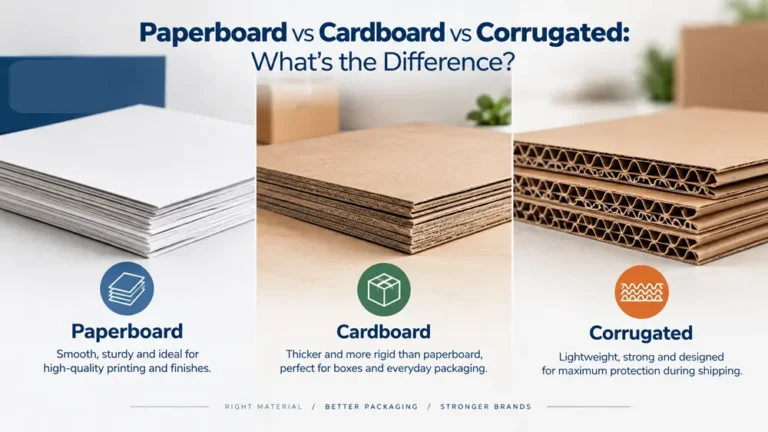
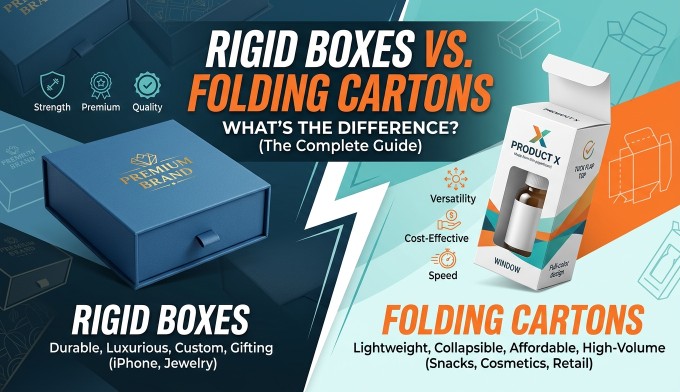
Paperboard, rigid board, molded fiber, and corrugated materials can all serve different purposes. The right material depends on whether the package is designed for retail presentation, shipping, protection, or gifting.
4. Build Sustainability Into the Structure
Sustainability should influence the packaging design from the beginning. Reducing unnecessary components and choosing recyclable materials can be more effective than adding an environmentally friendly label to a conventional package.
5. Make the Unboxing Experience Intentional
Think about what customers see first, what they remove next, and how the product is revealed. Even simple structural details can make opening a package feel more premium.
Final Thoughts
So, what kind of packaging does Apple use? The company’s latest packaging approach is centered on 100% fiber-based materials for newly manufactured packaging, supported by precisely engineered structures and a continued effort to reduce plastic.
Apple’s packaging success comes from combining several elements rather than relying on one feature: precise construction, minimal design, product protection, efficient material use, and a carefully controlled unboxing experience.
For other brands, the lesson is simple. Premium packaging isn’t necessarily about making the box bigger, heavier, or more elaborate. It is about making every material, structural element, and design decision serve a purpose.
That is what turns an ordinary package into an extension of the product and the brand.
Can Your Brand Create Apple-Inspired Packaging?
Brands can take inspiration from Apple’s packaging philosophy without copying its visual identity.
A custom packaging solution can use clean printing, precise dimensions, premium paperboard, rigid construction, molded fiber inserts, or custom compartments depending on the product.
At Packaging Heights, businesses can develop packaging around their specific product requirements, branding, budget, and sustainability goals. Custom printing and structural options allow brands to create packaging that feels intentional rather than generic.
FAQs
1. What type of packaging does Apple use?
Apple primarily uses fiber-based packaging, including paperboard, molded fiber, paper wraps, and fiber-based inserts.
2. Is Apple packaging plastic-free?
Apple states that every package manufactured today uses 100% fiber-based materials. Existing plastic-containing inventory represented less than 0.4% of its packaging footprint in fiscal year 2025.
3. Is Apple packaging recyclable?
Yes. Apple’s fiber-based packaging is designed to be recyclable through appropriate paper recycling systems.
4. Why does Apple use minimalist packaging?
Minimalist packaging reduces visual clutter while reinforcing Apple’s premium brand identity and creating a distinctive unboxing experience.
5. Does Apple use molded fiber packaging?
Yes. Apple uses molded fiber and other paper-based components to provide product protection while reducing reliance on plastic.
6. How does Apple protect products without plastic?
Apple uses precisely engineered paperboard and fiber structures, inserts, trays, and compartments to secure products and accessories.
7. Is Apple’s packaging sustainable?
Apple has significantly reduced plastic in its packaging and transitioned newly manufactured packaging to 100% fiber-based materials.
8. Can other brands use Apple’s packaging approach?
Yes. Brands can apply similar principles through custom packaging, precise dimensions, fiber-based materials, sustainable inserts, and thoughtful unboxing design.


 Company
 Top products
 Help
Help
 Payment Method