When you grab a brochure, feel a business card, or open a fancy product, the very first thing your brain picks up on is how the paper feels. Is it flimsy, or does it seem sturdy?
This tactile impression comes down to one key element: GSM in paper. It defines the paper’s weight, thickness, and durability. If you’re printing regular documents, the GSM isn’t a huge deal. But when you’re aiming for that high-end design for your brand, understanding GSM is crucial. It really shapes how people perceive your brand.
A lightweight sheet might save money for bulk printing, but heavier stock shows professionalism and quality. That’s why businesses, designers, and manufacturers use GSM to find the right balance between function and how the final product looks.
In this guide, we’ll cover all you need to know about paper GSM for printing and packaging. We’ll look at how it affects thickness, the typical GSM ranges, and how to pick the best choice for your project.
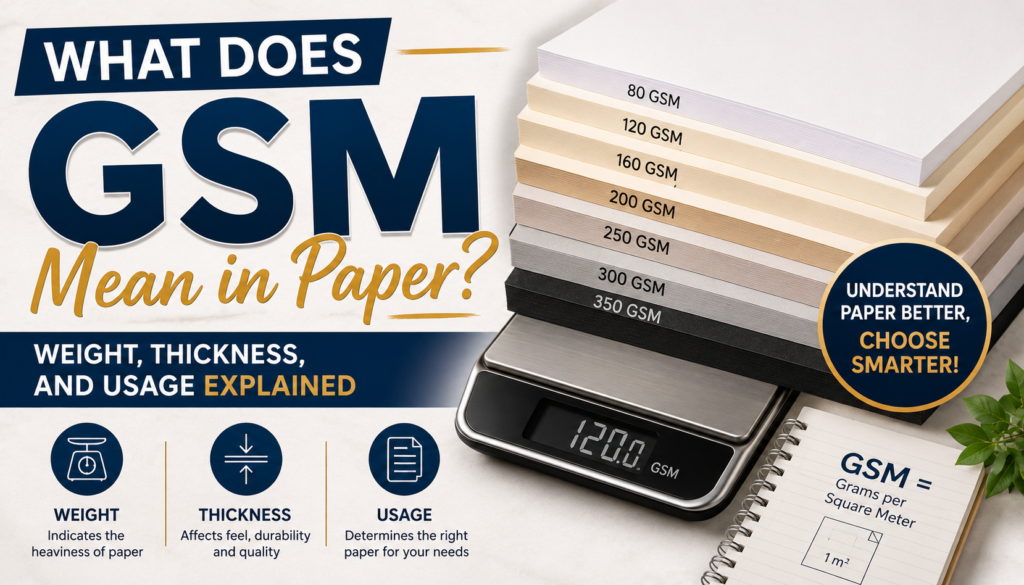
What Is GSM in Paper?
GSM, or grams per square meter, defines paper weight. It’s just how much a square meter of paper weighs in grams. This makes comparing paper types easy across industries and regions, too.
Higher GSM means heavier, thicker paper, while lower GSM means it’s lighter, thinner, and more flexible. So, the higher the GSM, the better for projects needing durability, like postcards or flyers. Thin paper? Great for magazines or notebooks!
GSM vs Thickness: Are They the Same?
A common myth is that GSM tells you exactly how thick paper is. Sure, it influences thickness, but it’s not the only thing at play. The type of pulp, any coating, and how it’s made during manufacturing matter too.
For instance, two papers could have the same GSM, but one feels bulkier and the other denser. Still, in everyday use, you’ll find that higher GSM paper is usually more rigid and durable.
Why GSM Matters in Printing
Picking the right paper GSM affects how your prints turn out, how useful they are, and how much they cost. Lighter paper works great for regular printing jobs, but heavier paper looks nicer and lasts longer.
Most offices use 70-90 GSM for everyday stuff since it’s cheap and easy to manage. For pro projects like brochures or flyers, though, folks go for 120-170 GSM. That kind just gives you better prints and that extra nice texture you can feel.
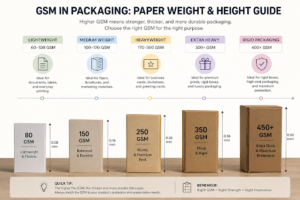
Common GSM Ranges and Their Uses
Understanding different GSM categories helps you select the right paper for your needs:
1. Lightweight Paper (60–100 GSM)
This category includes everyday paper used for:
- Office documents
- Notebooks
- Photocopying
It is affordable, flexible, and suitable for high-volume printing.
2. Medium Weight Paper (100–170 GSM)
This range is ideal for:
- Flyers and brochures
- Posters
- Marketing materials
It provides a balance between durability and flexibility, making it perfect for promotional use.
3. Heavyweight Paper (170–300 GSM)
Heavier paper is used for:
- Business cards
- Invitations
- Greeting cards
It offers a premium look and feel, enhancing brand perception.
4. Extra Heavy Paper (300+ GSM)
This category is commonly used in:
- Packaging and boxes
- Luxury branding materials
- Premium prints
It provides excellent rigidity and structural strength.
GSM in Packaging: Why It’s Important
In the packaging industry, GSM paper weight plays a crucial role in both protection and presentation. Higher GSM materials are used to create durable packaging that can withstand handling and transportation.
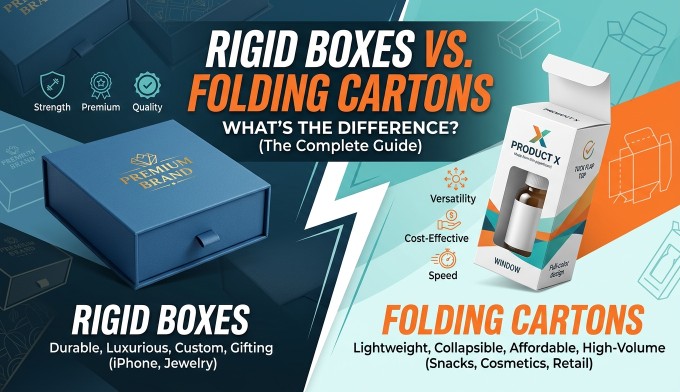
For example, 200–350 GSM cardstock is often used for folding cartons, while even thicker materials are used for rigid packaging. The right GSM ensures that packaging not only protects the product but also enhances its visual appeal.
How to Choose the Right GSM
Selecting the right GSM depends on your specific needs. Here are a few factors to consider:
- Purpose: Is the paper for printing, marketing, or packaging?
- Durability: Will it need to withstand handling or shipping?
- Budget: Higher GSM paper typically costs more
- Brand Image: Premium brands often prefer thicker materials
For everyday use, a lower GSM works fine. But for branding and packaging, investing in higher GSM can significantly improve customer perception.
GSM and Print Quality
Another important factor is how GSM affects print quality. Heavier paper absorbs ink differently, resulting in sharper images and more vibrant colors. This makes higher GSM paper ideal for high-quality printing projects.
On the other hand, very thin paper may allow ink to bleed through, reducing overall print clarity.
GSM vs Paper Types
It’s also important to understand that GSM is just one aspect of paper selection. Paper type—such as coated, uncoated, matte, or glossy—also affects the final result.
For example:
- Coated paper enhances color vibrancy
- Uncoated paper offers a natural, textured feel
- Glossy paper provides a shiny, polished look
Combining the right paper type with the appropriate GSM ensures the best outcome.
Common Misconceptions About GSM
Many people believe that higher GSM always means better quality. While higher GSM does provide durability and a premium feel, it is not always necessary.
For instance, using very high GSM paper for everyday printing would be costly and impractical. The key is to match the GSM with the intended use.
GSM Conversion and Global Standards
Unlike other paper weight systems (such as pounds in the US), GSM is a universal measurement. This makes it easier for businesses to standardize their printing and packaging requirements globally.
Understanding GSM paper thickness helps avoid confusion when sourcing materials from different regions.
Final Thoughts
Understanding GSM in paper is essential for making informed decisions in printing and packaging. From lightweight office paper to heavy-duty packaging materials, GSM determines how paper performs, feels, and presents your brand.
By choosing the right paper GSM weight, you can ensure durability, enhance print quality, and create a lasting impression. Whether you’re printing documents, designing marketing materials, or developing custom packaging, GSM plays a key role in achieving the desired results.
As businesses continue to focus on quality and presentation, choosing the right GSM becomes more than just a technical decision; it becomes a branding strategy. At Packaging Heights, we understand how the right paper weight can transform ordinary packaging into a premium experience. From lightweight prints to high-GSM rigid packaging, our solutions are designed to balance durability, aesthetics, and cost. Whether you’re building a new product line or upgrading your packaging, the right GSM choice, paired with expert execution, can leave a lasting impression on your customers.
FAQs
1. What does GSM mean in the paper?
GSM stands for grams per square meter and measures the weight of paper.
2. Is higher GSM paper thicker?
Generally, yes, but thickness also depends on material and manufacturing.
3. What GSM is best for printing?
80–100 GSM paper is ideal for everyday printing tasks.
4. What GSM is used for business cards?
Typically, 250–350 GSM cardstock is used.
5. What GSM is suitable for packaging?
Usually 200 GSM or higher, depending on the product.
6. Does GSM affect print quality?
Yes, higher GSM often results in better print clarity and durability.
7. Can two papers have the same GSM but different thickness?
Yes, due to differences in material composition and density.
8. Is GSM important for branding?
Absolutely. Higher GSM paper enhances the premium look and feel of your brand materials.



 Company
 Top products
 Help
Help
 Payment Method