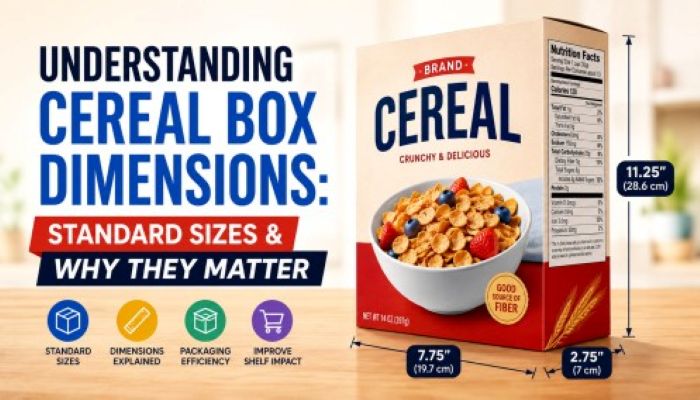
Have you ever stood in front of a row of brightly colored cereal boxes, pondering as to why each one of them must be of the same shape and size? You might be looking for a way to organize your messy kitchen pantry shelves, or you are responsible for marketing a cereal brand.
Regardless of your reason, the truth is that cereal box dimensions have been deliberately designed through the years, taking into account many psychological studies, engineering concepts, and calculations from logistics math.
In this article, we will examine the fascinating world of cereal box packaging, find out what the standard sizes of such boxes and how significant it is to know these exact dimensions.
When analyzing a box of cereal, what we see is a 3-dimensional geometric figure called a rectangular cuboid. The description of the cereal box geometry requires three measurements: cereal box height, length (width of the front surface of the box), and depth/width (width of the box when viewed from the side).
The Anatomy of a Cereal Box: What Are the Standard Dimensions?
The ideal measurements of the cereal box have been worked out by its producers in such a way that the optimal combination of customer convenience and retailer needs was found.
Standard Cereal Box Dimensions (Inches & Centimeters)
Height (Vertical): 12 inches (~30.5 cm)
Length (Horizontal): 8 inches (~20.3 cm)
Width (Depth/Side): 2.5 inches (~6.4 cm)
Such a box of cereal usually holds approximately 10 to 14 ounces (283 to 396 grams) of cereal. However, as everyone who is a fan of cereal knows, there are many varieties on the market.
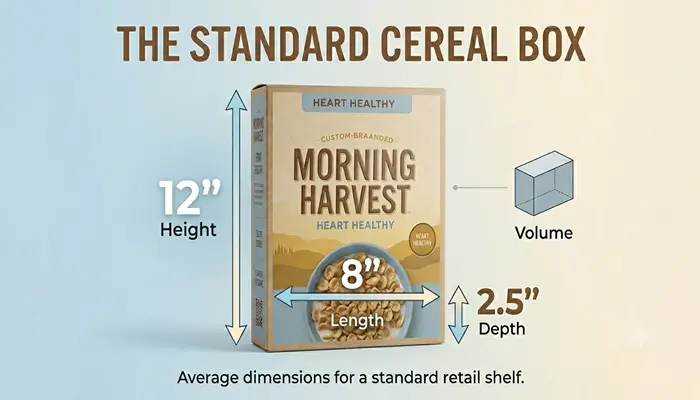
Here is a comprehensive breakdown of the most common cereal box sizes you will find on the market shelves today:
Table: Comprehensive Cereal Box Dimension Chart
| Box Type | Length (Inches) | Height (Inches) | Depth (Inches) | Volume / Capacity | Best Used For |
| Mini / Single-Serve | 5.0″ | 7.0″ | 2.0″ | 1.0 – 1.5 oz | Hotels, travel, variety packs |
| Standard / Regular | 8.0″ | 12.0″ | 2.5″ | 10 – 14 oz | Average households, standard shelves |
| Family-Size | 9.25″ | 13.5″ | 3.0″ | 18 – 22 oz | Larger families, high-consumption households |
| Giant / Mega-Size | 11.0″ | 14.5″ | 3.5″ | 26 – 32 oz | Wholesale clubs, bulk buyers |
Why Cereal Box Dimensions Matter: The Hidden Strategy
Putting food in a box may sound like an easy process, but it is not. Now, let us analyze some of the key factors that explain why the average size of cereal box packaging is so important to businesses.
1. Maximizing “Billboard Space” (The Psychology of Shelf Presence)
One fact that probably caught your attention when buying cereals was their unusually tall and wide but thin boxes. Of course, there is a reason for this – the front side of the packaging in marketing terms, is called billboard space.
The taller and wider the front face of the box is, the more billboard space will be available for printing logos and other elements such as cartoon characters, “Good source of fiber,” or “Heart healthy” statements. If the box had a cubic shape, it would have the same volume but would occupy less billboard space than competitors do.
2. The Golden Rule of Retail: Slotting and Grocery Shelf Alignment
The display racks in grocery stores are standardized. The design of most supermarket display racks includes standard height clearances in order to utilize vertical space.
If a typical box of cereal has a height of 12 inches, then its size will be perfect for standard shelves in a grocery store because there will be enough clearance to take the box out comfortably. If the manufacturer makes the box 16 inches high, then this product will not fit into the standard rack and will be placed only on the top shelf.
3. Supply Chain and Shipping Efficiency
In terms of transporting products in large quantities, every single centimeter of wasted space translates into increased costs. It is necessary to calculate custom dimensions in order to avoid any wasted space within secondary packaging (corrugated master cartons).
This will allow for proper packing and stacking of thousands of boxes on the shipping pallets. It will greatly reduce transport costs and the carbon footprint and will avoid the shifting of products while in transport.
The Mystery of the Empty Space: Product Settlement vs. Box Size
This is something we all know about: you unpack a new box of cereals, pull back the plastic wrap, and see that the box is only two-thirds full. And there is a well-known complaint from consumers called “slack fill” that has been formed because of it.
But this isn’t done to deceive you into thinking that you aren’t getting what you paid for. The truth is, it’s just a matter of food physics and product density:
- Product Settlement: Cereals are packaged according to weight, not volume. Due to the vibrations during transportation in the truck, the cereal pieces shift position to settle more densely. The volume that was occupied by the cereal at the manufacturing plant is now greatly reduced.
- Structurual Protection: The air inside the inner bag serves to protect the cereal from damage. In the case of fragile flake-based cereals, the presence of the air pocket ensures that the flakes do not crush themselves into a powder while being transported.
- Density Differences: More dense cereals such as granola or clusters will occupy much less physical space than puffed rice or cornflakes, which occupy more physical space although weighing exactly the same.
Table: Cereal Density and Volume Variations
| Cereal Type | Weight | Visual Box Fill (Post-Shipping) | Box Size Required |
| Puffed Rice / Cornflakes | 12 oz | Looks fuller (high volume, low density) | Requires a standard or larger box |
| Granola / Muesli | 12 oz | Looks half-empty (low volume, high density) | Often packed in shorter, thicker boxes |
Designing for Sustainability: The Evolution of Cereal Packaging
With increased environmental consciousness, the traditional landscape packaging for cereal boxes. Traditionally, companies depended on large boxes to make themselves appear larger compared to their competitors. Modern-day consumers want sustainability.
Elimination of waste is one of the major issues in contemporary designs:
- Smaller Footprint: Numerous brands are cutting down a few millimeters from the dimensions of cereal box packaging in order to use less cardboard but leave the internal product weight intact.
- Environmentally Friendly Packaging: Brands are switching from cardboard that is heavily bleached to recycled kraft paper boards and printing vegetable-based ink onto it.
- Alternative Box-in-a-Pouch Design: Certain innovative firms have gone even further and eliminated the cardboard box by choosing strong and reusable pouches.
How to Accurately Measure a Cereal Box
If you are someone who likes to recycle old boxes into something new, someone looking for boxes that can be used to store plastic items, or someone who wants to introduce a new line of products, here’s how you should always go about measuring a box:
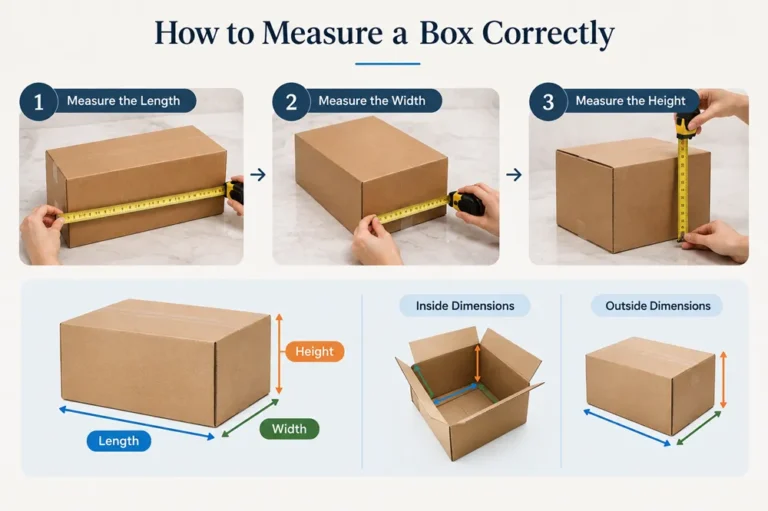
Length (Width): Take a measurement on the face of the box going from left to right.
Height: Take a measurement from the bottom base to the very top of the box.
Depth (Thickness): Take a measurement of the smaller side panel going from front to back.
Always note down the measurements in the sequence of Length x Width x Height.
Eye-Catching Trends in Cereal Box Design
The cereal aisle is one of the most competitive segments when it comes to retail space. In order to attract consumer attention within split seconds and compete among the numerous other boxes on display, marketers have started using far more innovative designs than simply featuring mascots’ illustrations. Currently, packaging design trends are experiencing dramatic evolution, which includes:
Retro and Nostalgic Revivals: Brands are returning to their old logos, vintage typography, retro color schemes, and logos of the 1980s and 1990s. Such packaging works well with millennials who appreciate the comfort and familiarity of childhood memories.
Minimalism and Clean Labeling: The opposite extreme of packaging is used by healthy and keto-friendly cereals. Their minimalist design with a lot of blank space, clear sans-serif font type, and pastel or white background suggests high-quality and clean products.
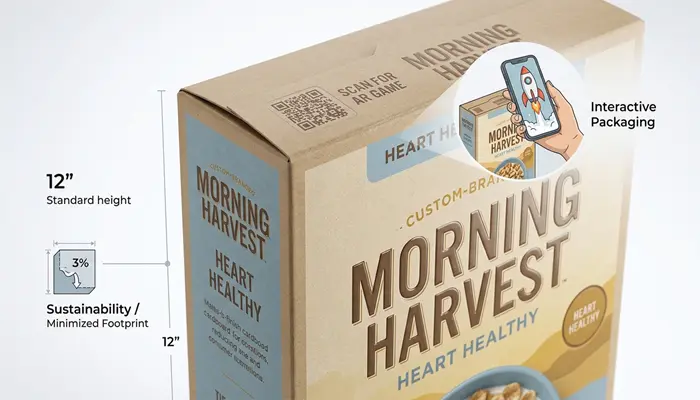
Interactive and Gamified Packaging: The back of the box is no longer just for word puzzles. Interactive packaging technologies such as AR via QR codes and Spotify morning playlists have become popular features on today’s cereal boxes.
Textured and Matte Surfaces: Visuals are not the only thing that can help a product catch one’s eye; feel counts as well. Some top-quality brands have been using spot UV varnishing, embossing, and matte surfaces on their corrugated boxes to make a premium tactile sensation.
Bring Your Packaging Vision to Life with Packaging Heights
It takes the understanding of how to use the complex mathematics of cereal box dimensions, shelf placement, and design trends to get a great product out into the market. A box is not just a box; it is the number one representative of your company in the busy world of retail space. Whether you require a regular box for your family size cereal or a fully customized box, an environmentally friendly retail box solution, let Packaging Heights do it for you. Our design specialists and printing experts will work hard to create custom packages that will combine the strength with shelf appeal.
FAQs
1.How tall is a standard size cereal box?
The standard height of a cereal box is normally 12 inches (around 30.5 centimeters). This height is specifically made to allow a perfect fit on standard-sized shelves and increase the visible surface area of the brand on the shelves.
2.Why are there usually empty spaces on top of cereal boxes?
The empty space in a box of cereal is referred to as “slack fill.” This is not an error in the manufacturing process but arises from the natural settling of cereals during transit. The space also protects cereals from crushing into powder by acting as a protective buffer.
3.What are the dimensions of a family-size cereal box?
The dimensions of a family-size cereal box are around 13.5 inches high, 9.25 inches long, and 3 inches wide. It is made to accommodate a larger quantity of the product, 18 to 22 ounces.Cereal Box
4.How does the use of custom dimensions affect shipping costs for companies?
By optimizing the dimensions of your cereal box in inches so that it fits perfectly on your shipping pallets, you avoid wasting any space. Properly measured dimensions ensure that the boxes will not move around, thus reducing breakage and minimizing shipping costs.
5.Can manufacturers customize cereal box shapes?
Yes. Although the rectangular cuboid is the most common shape because of its efficient shelving, companies can design customized die-cuts, handles, or even hexagons with the help of structural designers.



 Company
 Top products
 Help
Help
 Payment Method