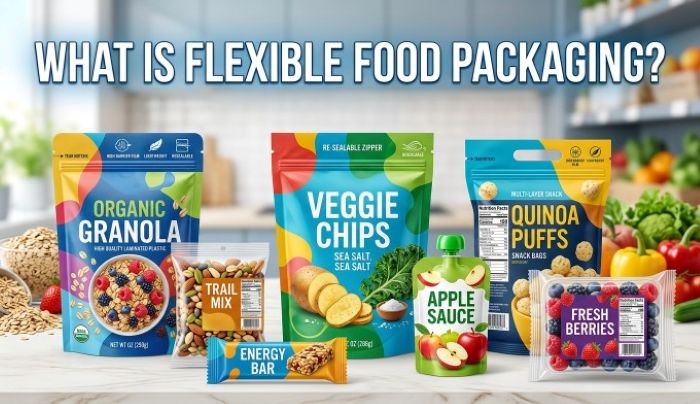
Flexible food packaging has become one of the most widely used packaging solutions in the food industry. From snack pouches and coffee bags to wraps, sachets, and resealable food bags, flexible formats offer manufacturers a practical way to protect products while keeping packaging lightweight, functional, and visually appealing.
Unlike rigid containers that maintain a fixed shape, flexible packaging can bend, fold, roll, or conform to the shape of its contents. Depending on the application, it can be made from plastic films, paper, aluminum foil, or multilayer structures designed to provide specific barrier and performance properties.
But what exactly is flexible food packaging, how does it work, and why are so many food brands choosing it?
This guide covers everything you need to know about flexible packaging for food, including its materials, types, benefits, applications, sustainability, and how it compares with rigid packaging.
What Is Flexible Food Packaging?
Flexible food packaging is packaging made from materials that can easily change shape without breaking or losing their basic functionality. Unlike glass jars, metal cans, or rigid plastic containers, flexible packages do not have a permanently fixed structure.
Common examples include:
- Stand-up pouches
- Flat pouches
- Sachets
- Food wrappers
- Flexible bags
- Vacuum bags
- Rollstock films
- Flow-wrap packaging
- Flexible lidding
- Spouted pouches
The structure of a flexible package can vary considerably depending on the food product and its requirements. A package designed for dry cereal, for example, may need different barrier properties from one designed for coffee, sauces, frozen foods, or meat.
This makes flexible food packaging solutions highly adaptable across different food categories.
Why Is Flexible Packaging Important for Food?
Food products can be affected by oxygen, moisture, light, temperature, grease, contamination, and physical handling. Packaging therefore has to do much more than simply contain the product.
A properly designed package creates a barrier between food and the external environment, helping maintain product quality throughout storage, transportation, and retail.
For example, packaging for crispy snacks may need moisture protection, while coffee packaging may require protection from oxygen and light. Frozen foods require materials that can withstand low temperatures and repeated handling.
For food sold in the United States, packaging materials intended for food contact also need to meet applicable food-contact requirements for their intended conditions of use. The FDA regulates food-contact substances and considers factors such as intended use and potential migration when evaluating their safety.
Types of Flexible Food Packaging
There is no universal flexible package that works for every food product. Different formats provide different combinations of protection, convenience, branding, and functionality.
1. Stand-Up Mylar Pouches
Stand-up Mylar pouches are one of the most recognizable forms of flexible packaging. A bottom gusset allows the pouch to stand upright, making it suitable for retail shelves and pantry storage.
They are commonly used for:
- Snacks
- Nuts
- Dried fruits
- Candy
- Coffee
- Pet food
- Sauces
- Powdered foods
Brands can also add resealable zippers, tear notches, handles, and spouts to improve convenience.
2. Flat Pouches and Sachets
Flat pouches and sachets are compact formats often used for single portions or products that do not require a standing package.
They can be used for condiments, spices, powdered ingredients, sauces, snacks, and other food products.
Because they can be produced in relatively small formats, sachets are particularly useful for portion-controlled products and food-service applications.
3. Flexible Films and Wrappers
Flexible films are widely used for individually packaged foods. Depending on the material structure, films can provide strength, sealability, moisture resistance, grease resistance, and other properties.
Flow-wrap packaging is commonly used for products such as snack bars, baked goods, confectionery, and other individually wrapped foods.
4. Vacuum Packaging
Vacuum packaging removes air from the package before sealing. This reduces the amount of oxygen surrounding the product and can be useful for foods where controlled oxygen exposure is important.
Vacuum packaging is commonly associated with meat, seafood, cheese, and other products requiring specialized preservation and barrier performance.
5. Retort Pouches
Retort pouches are specialized flexible packages designed to withstand heat processing. They can be used for shelf-stable meals, sauces, soups, and other prepared foods.
Because retort processing subjects the package to demanding temperature conditions, these packages require carefully engineered material structures and reliable seals.
What Materials Are Used in Flexible Food Packaging?
The material selected for flexible packaging depends on the product, required shelf life, filling process, distribution environment, and desired package performance.
Plastic Films
Plastic films are common in flexible packaging materials because they can provide flexibility, strength, sealability, and barrier performance.
Polyethylene (PE) and polypropylene (PP) are among the polymers used in flexible packaging applications. Different films can be selected according to the properties required by the product.
Aluminum Foil
Aluminum foil packaging can provide strong protection against light, oxygen, and moisture. It is often used as part of multilayer structures where high barrier performance is required.
This can make foil-containing structures useful for products that are particularly sensitive to environmental exposure.
Paper
Paper can provide a natural appearance and excellent printing surface for food brands. It is often used when visual presentation and a paper-based feel are important.
However, paper alone may not provide sufficient protection for every food product so it may be combined with coatings or other layers depending on the application.
Multilayer Packaging
Many flexible food packaging materials use multiple layers, with each layer performing a different function.
One layer may provide strength, another may provide barrier protection, and another may provide heat-sealing properties.
This allows packaging manufacturers to engineer a structure tailored to the food’s needs rather than relying on a single material to perform every function.
Benefits of Flexible Food Packaging
The growth of flexible packaging is driven by several practical advantages.
Lightweight Construction
Flexible packages are generally lightweight compared with many rigid packaging formats. Lower package weight can make products easier to handle and may improve transportation efficiency.
Efficient Material Use
Flexible formats can provide useful product protection without requiring a thick, rigid container. In suitable applications, this can reduce the amount of packaging material required.
Product Protection
Depending on its structure, flexible packaging can be designed to protect from:
- Oxygen
- Moisture
- Grease
- Light
- Contaminants
- External odors
These barrier properties can help preserve food quality and support the desired shelf life.
Consumer Convenience
Modern flexible packages can include features such as resealable zippers, tear-open sections, spouts, handles, and easy-open seals.
These features can make products easier to carry, open, pour, store, and use.
Strong Branding Potential
One of the biggest advantages for food brands is the printable surface available on many flexible formats.
Custom printed food packaging can feature brand colors, logos, product photography, nutritional information, preparation instructions, promotional messages, and other important details.
Flexible Food Packaging vs. Rigid Food Packaging
Both flexible and rigid packaging have important roles in the food industry. The right option depends on the product and its performance requirements.
| Feature | Flexible Packaging | Rigid Packaging |
| Structure | Bendable and adaptable | Fixed shape |
| Weight | Generally lightweight | Often heavier |
| Storage | Can be highly space-efficient | Depends on container design |
| Printing | Extensive branding options | Extensive branding options |
| Convenience | Zippers, spouts, tear notches, etc. | Often strong structural protection |
| Common formats | Pouches, films, bags, sachets | Jars, cans, tubs, cartons |
| Applications | Snacks, coffee, sauces, frozen foods | Beverages, canned foods, retail foods |
The decision should ultimately be based on product protection, shelf-life requirements, manufacturing processes, transportation, consumer convenience, and brand positioning.
Flexible Packaging Applications in the Food Industry
The versatility of flexible food packaging allows it to serve a wide range of food categories.
Snacks
Chips, crackers, nuts, popcorn, snack mixes, and other dry foods commonly use pouches and flexible films. Appropriate barrier properties can help protect these products from moisture and environmental exposure.
Coffee and Tea
Coffee packaging often requires strong barrier protection because oxygen, moisture, and light can affect product quality.
Flexible coffee bags can also incorporate features such as degassing valves, resealable closures, and high-barrier layers.
Frozen Foods
Frozen food packaging needs to remain functional under low-temperature conditions while also withstanding transportation, handling, and storage.
Flexible bags and films can be designed specifically around these requirements.
Meat and Seafood
Vacuum bags and high-barrier flexible films are frequently used for meat and seafood products where oxygen exposure, contamination, and package integrity are important considerations.
Sauces and Condiments
Pouches and sachets can provide convenient packaging for sauces, dressings, ketchup, marinades, and other liquid products.
Spouted pouches can make larger packages easier to pour, while resealable closures can help with repeated use.
Bakery and Confectionery Products
Flexible films can be used for cookies, pastries, snack cakes, brownies, candy, and other baked or confectionery products. For brands that want a more structured presentation, flexible inner packaging can also be combined with attractive printed boxes.
For example, a bakery brand might use protective inner packaging alongside branded cookie boxes to create a more polished retail or gifting experience.
Similarly, manufacturers selling breakfast products can combine flexible inner bags with printed cereal boxes to provide product protection and strong shelf visibility.
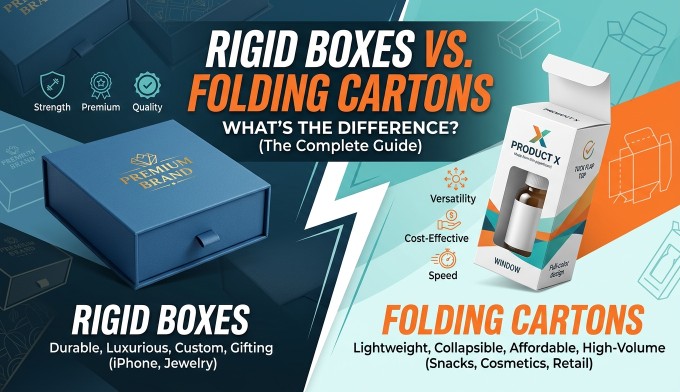
Flexible Packaging and Custom Food Boxes: What’s the Difference?
Flexible packaging and paperboard food boxes often serve different purposes, but they can work together effectively.
Flexible packaging is particularly useful when the product needs a lightweight barrier around the food. Printed paperboard boxes, on the other hand, can provide structural support, branding, shelf presence, and additional protection.
For bakery and confectionery brands, packaging can be customized according to the product. A bakery may choose branded bakery boxes for cakes, pastries, cookies, or other baked products, while a confectionery business may use premium chocolate boxes to create a stronger presentation for giftable products.
This combination of inner flexible packaging and outer custom printed packaging can provide both functional protection and a memorable brand experience.
Is Flexible Food Packaging Sustainable?
Sustainability is an increasingly important consideration when developing food packaging solutions, but there is no single material that is automatically the most sustainable in every application. Flexible packaging can have advantages because it is lightweight and can require relatively little material compared with some rigid alternatives.
However, sustainability depends on the complete packaging system, including material sourcing, manufacturing, transportation, product protection, and end-of-life management.
Multilayer flexible structures can sometimes be more difficult to recycle because they combine different materials. This is why the industry is increasingly developing mono-material structures, recyclable films, improved barrier technologies, and other approaches intended to improve end-of-life outcomes. Recycled materials are another area of development. The FDA evaluates proposed recycled plastic processes for food-contact applications, with considerations including contamination, material purity, intended food type, temperature, and duration of contact.
What Should You Consider When Choosing Flexible Food Packaging?
Selecting the right flexible packaging for food requires a product-specific approach.
Consider these factors before choosing a material or format:
Product Characteristics
Determine whether the product is dry, liquid, oily, acidic, frozen, powdered, or ready-to-eat.
Barrier Requirements
Identify whether the product needs protection against oxygen, moisture, grease, light, or odors.
Shelf Life
Longer shelf-life requirements may require more advanced barrier structures than products intended for quick consumption.
Filling and Sealing
The packaging material needs to work with the filling, forming, and sealing equipment used by the manufacturer.
Consumer Experience
Consider whether the package should include a zipper, spout, handle, tear notch, window, or other convenience feature.
Branding
Think about how much space is needed for logos, product information, graphics, nutritional details, and other printed content.
Distribution
Packaging should be appropriate for the expected transportation, handling, storage, temperature, and retail conditions.
Sustainability Goals
Evaluate material choices and end-of-life options alongside product protection rather than considering sustainability as a separate issue.
Choose Packaging Heights for Your Custom Food Packaging
The right packaging should protect your food while presenting your brand professionally. At Packaging Heights, we help businesses develop customized packaging solutions designed around their product, dimensions, branding, and market requirements.
From material and structural considerations to custom printing and finishing, we can help you create packaging that looks professional and supports the way your product is stored, transported, displayed, and experienced by customers.
Ready to create custom packaging for your food brand? Contact us today to discuss your requirements, request a quote, and develop packaging tailored to your product.
FAQs
What is flexible food packaging?
Flexible food packaging is packaging made from materials that can bend, fold, roll, or conform to the product. Common formats include pouches, bags, sachets, wrappers, films, and vacuum packaging.
What materials are used in flexible food packaging?
Common food packaging materials include plastic films, paper, aluminum foil, and multilayer structures. The material combination depends on the product’s barrier, strength, sealing, temperature, and shelf-life requirements.
Is flexible packaging safe for food?
Flexible packaging intended for direct food contact must be made from materials suitable for the intended food-contact application and conditions of use. In the United States, the FDA regulates food-contact substances and evaluates applicable safety considerations.
Is flexible food packaging recyclable?
Some flexible packaging formats are recyclable, while others can be difficult to recycle because they contain multiple materials or layers. Recyclability depends on the specific package structure and the recycling infrastructure available for that material.
What is the difference between flexible and rigid packaging?
Flexible packaging can bend or fold, while rigid packaging maintains a fixed shape. Flexible formats are often lightweight and highly adaptable, whereas rigid formats can provide greater structural support for certain products.
Can flexible packaging be customized?
Yes. Depending on the format and material, businesses can customize dimensions, printing, finishes, closures, gussets, windows, and other functional features.
What is high-barrier flexible packaging?
High-barrier flexible packaging is designed to provide enhanced protection against environmental factors such as oxygen, moisture, light, or odors. It is commonly used for products that require stronger protection to maintain quality and shelf life.
Is flexible packaging better than boxes?
Neither is universally better. Flexible packaging and boxes serve different purposes. Flexible materials can provide lightweight product protection, while printed boxes can provide structure, branding, shelf presence, and additional protection. In many food applications, both can be used together.


 Company
 Top products
 Help
Help
 Payment Method